Monday, May 2, 2022

The Working Catholic: Routine by Bill Droel


Clocks are everywhere because our modern economy needs to know the time.

Our “regular measurement of time and the new mechanical conception of time arose in part out of the routine of the monastery,” writes Lewis Mumford (1895-1990) in Technics and Civilization (University of Chicago Press, 1934). It was long ago that Pope Sabinianus (d. 606) ordered bells to be rung seven times per day to alert the faithful to the liturgy of the hours.


As an urban economy eventually emerged, merchants demanded more precision. A public mechanical clock appeared in Belgium in 1188; more places followed in the 1200s. By 1345 the measurement of 60 minutes to an hour and 24 hours to a day became standard. By 1370 Paris had a well-designed modern clock suitable for urban life. In the 1600s many families in Holland and England acquired a mechanical clock for their homes.

Yet the monasteries came first, according to Mumford. They “helped to give human enterprise the regular collective beat and rhythm of the machine; for the clock is not merely a means of keeping track of the hours, but of synchronizing the actions of men.” As the years went by, however, some began to think that a “completely timed and scheduled and regulated” machine civilization “does not necessarily guarantee maximum efficiency,” Mumford concludes. Sticking to the clock is not best for human development.

 Meghan O’Gieblyn, drawing upon Mumford, provides a reflection on routine for Harper’s Magazine (1/22). Have people become machines, she asks? Is the routine imposed by our economy dehumanizing? Or “is it possible in our age of advanced technology to recall the spiritual dimension of repetition”? Does a spiritual motivation lurk “in the gears of modern routine”?

High tech and advanced automation enhance work and life, say its cheerleaders. Computers and robots free us to set aside drudgery and bring forth our agility, flexibility, creativity and spontaneity. However, “the rhetoric of flexibility…despite its existential promise to make us more human frequently undergirds policies that make the lives of workers more precarious,” O’Gieblyn writes.  For example, online retail and the apps on our mobile device decrease variety by conditioning our choice of products and services.

The goal cannot be the elimination of clocks. Covid-19 previews an unstructured existence within a total computer economy, a total gig economy and a total do-it-yourself, round-the-clock life. What is the result of decreased regimentation? Maybe too many naps. Excessive internet surfing. Heightened anxiety about childcare and schooling. Unpredictable and/or lower wages. Spiritual exhaustion.

Humane work and a fuller life is not liberation from repetition. The old analysis still applies: Despite talk about teamwork and participation, workers are estranged from one another, from the process and outcome of their labor and eventually from themselves. That’s because too few workers—from warehouse workers to floor managers to computer programmers to middle executives—are insufficiently taught the process and the product of their labor. There just isn’t enough time to do so, we’ve assumed.

As for O’Gieblyn, she believes “there is [still] something transcendent in the pleasures of repetition.” Tranquility is not simply the absence of structure. She cites St. Thomas Aquinas (1225-1274) in saying that a full life requires habits aimed toward the common good. A good habit is not slavery; it is a form of grace. And freedom, O’Gieblyn concludes, is not “eliminating necessity from our daily lives.” Freedom is “the ability to consistently choose the good.”

For more from O’Gieblyn, get God, Human, Animal, Machine (Knopf Doubleday, 2021).

Droel edits INITIATIVES (PO Box 291102, Chicago, IL 60629), a printed newsletter on faith and work.

Monday, April 25, 2022

1886 May 1st Historic Battles for the 8-Hour Day


Remembering those killed in Milwaukee and Chicago, demonstrating for the 8-hour day.


The Eight-Hour Song:

We mean to make things over;

    We're tired of toil for naught

But bare enough to live on:  never

    an hour for thought.

We want to feel the sunshine; we

    want to smell the flowers;

We're sure that God has will it,

    and we mean to have eight hours.

We're summoning our forces from

    shipyard, shop, and mill:

Eight hours for work, eight hours

    for rest, eight hours for what we will. 


Four workers were hanged by the state of Illinois for their participation in the demonstration:  Albert Parsons, August Spies, George Engel, Adolph Fischer. 

Spies is quoted as saying, "Here you will tread upon a spark, but there and there, behind you and in front ofyou, and everywhere flames blaze up.  It is a subterranean fire.  You cannot put it out."


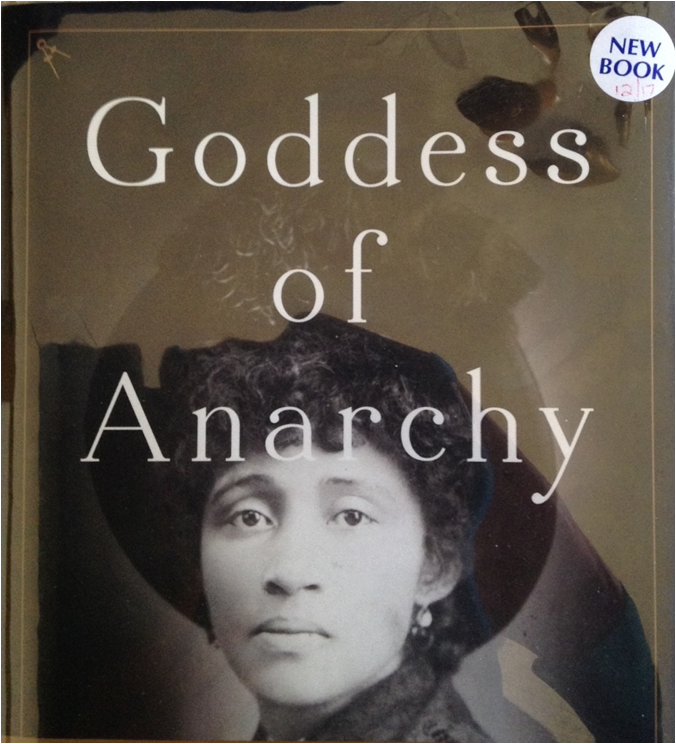
 Lucy Parsons said of her husband, 

"My husband, I give you to the cause of liberty.  I now go forth to take your place.  I will herald abroad to the American people the foul murder here today at the behest of monopoly.  I too expect to mount the scaffold.  I am ready.”


May 1st and 2nd, 2022


Voces de la Frontera is calling for all to stand up for justice with a two-day strike to show politicians & corporate America that immigrants and Latinz workers are essential. 


Sunday, May1st:  Milwaukee march to the office of Senator Ron Johnson, meet at 8th & Mitchell11:00 am


 Monday, May 2nd:  Madison Lobby Day at the Capitol, meet at 11:00 a.m.


Jeremy Rifkin's book, The End of Work, presents a challenge in the context of the 8-hour day.  (G.P. Putnam's Sons, New York 1995)


Thursday, April 21, 2022

The Fight for the Eight Hour Day: Haymarket Riot and Bayview Massacre


HAYMARKET

On May 4, 1886 at Chicago's Haymarket, several workers were killed while protesting the May 3rd killing of a worker demonstrating for an eight-hour work day.  


And the following day, Milwaukee workers were killed at the Bayview Roling Mills while demonstrating for an eight-hour work day.

BAYVIEW

Remember the 5th of May,

Governor Rusk and his nefarious day;

“Shoot at will,” he said.

Soon nine workers and a boy were dead.

Mark the calendar spot

It’s a tragedy not to be forgot.


MAY 1st MARCH


In Milwaukee on May 1, 2022, at 11:00 a.m.

 immigrant workers will march for immigrant rights from the offices

 of Voces de la Frontera, 737 W. Historic Mitchell St, to Senator Ron

 Johnson’s office.


STATEWIDE RALLY & LOBBY DAY

Monday, May 2 at 11a.m., Lobby Day in Madison at the State

 Capitol to restore both state driver licenses and in-state tuition for

 immigrants.


Monday, April 11, 2022

The Working Catholic: Easter Mess by Bill Droel


Advent is Lent; Christmas contains Easter and Easter contains Christmas. The Incarnation is Redemption and Resurrection.

Tom Stella (www.tomstella.org) of Soul Link in Colorado has a story: Once upon a time three monks were praying. The first imagined angels carrying him to heaven. The second imagined chanting in the company of angels and saints. The third, quite distracted, imagined the variety of food awaiting him in the refectory.  Later the devil wrote a report: I tried to tempt three monks but succeeded with only the first two.

The setting for the Christmas story (a crowed hotel, a manger and the sheep) conveys the truth of the Incarnation. God enters the human condition in a humble way. God lurks in ordinary circumstances. God keeps company with imperfect people. God awaits us in the refectory or the restaurant.

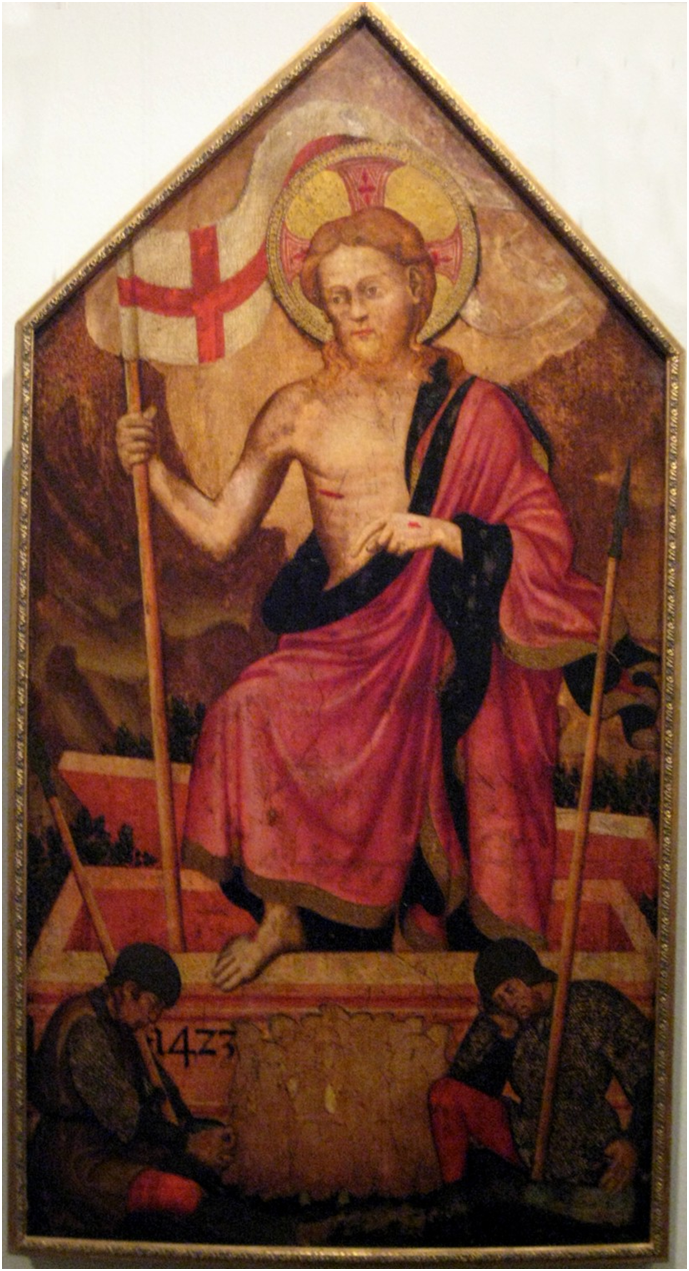
The Easter setting (dinner in an upper room, a traitor, a denier, a dusty courtyard, a heavy rock) should convey the same truth. But for some, the glory of the resurrection means God is back in God’s proper, serene, otherworldly place. The temptation about Easter is to thoroughly split the heavenly from the earthly, the spiritual from the material, the soul from the body. The messiness of Christmas and God’s Incarnation can be lost in the exhalation of Easter.

To keep the Incarnation in Easter, the evangelists insist on the bodily resurrection of Jesus. He ate, he conversed and he visited normal places. He invited Thomas to touch his physical body; saying in effect, I am not a ghost. Nonetheless a major heresy, Gnosticism, made significant inroads into early Christianity. This heresy teaches that Jesus was/is pure spirit and that briefly he was play-acting as a human. Gnosticism finds a companion in Platonic philosophy which asserts that the abstract and spiritual is superior to the material. Today this dualism with its superior spiritual themes is called New Age.

Some Christians make a similar mistake in equating the Resurrection with some kind of resuscitation. These Christians sometimes suppose that their heavenly existence is an identical continuation of earthly life with picnics, sports events, the same body but no illness. To counter this impression, the evangelists make it clear that the disciples do not at first recognize the resurrected Jesus. His body is different. Their resurrection faith emerges in conversation and tactile experience.

Let’s admit it is difficult to maintain awareness of the Incarnation. It is tempting to treat Christian faith as otherworldly. It is tempting to relegate God to a spiritual realm where angels sing and to not appreciate a hint of God in the dining hall. It is tempting to separate the Resurrection from the sheep and jostling crowd in Bethlehem. It is tempting to feel closest to God in some state of pure adoration.

It is, let’s admit, difficult to experience the resurrected Christ over on Kedzie Ave. near 61st St. where the homeless make their way, never humming a hallelujah chorus. It might be difficult to experience the joy of resurrection at the family’s Easter brunch where a loudmouth uncle repeatedly makes stupid comments. It might be difficult on Easter Monday to believe that the resurrection has anything to do with the petty resentments that pervade the office.

But Christ was born, Christ rose and Christ lives in ordinary comings-and-goings. Christ hints at glory in broken people, ambivalent settings and at odd moments. To stay attuned to the eternal joy of Easter requires the simplicity and patience of the first witnesses in Bethlehem. The heavy stone across the tomb is like the wood of the manger—materials essential to God’s plan of salvation.

Droel edits a newsletter on faith and work, INITIATIVES (PO Box 291102, Chicago, IL 60629).

Thursday, March 24, 2022

Mother Earth Nurturing Peace in a Time of War and Destruction


Sosegado:  Nakal Kolonton

“Está sentado mi corazón”

 An ancient Mayan image envisoned by Naúl Ojeda, Diccionario del Corazón, by Robert M. Laughlin, Smithsonian Institute, Taller Leñateros, 2002.

Monday, March 14, 2022

An Angry Mother Earth Over the Destruction of Creation by War and Greed


Encenderse de ira:  

Xch'ach'on kolonton,  "Es un enjambre mi corazón"

Aflame with rage, "My heart is in a swarm"


An ancient Mayan image envisoned by Naúl Ojeda, Diccionario del Corazón, by Robert M. Laughlin, Taller Leñateros, 2002.

Wednesday, March 2, 2022

The Sacred Earth and Irish Celtic Spirituality


Only a fool would fail

To praise God in his might

When the mindless birds

Praise Him in their flight.

Anonymous (Ancient Irish poem translated by Brenden Kennelly)


The global crisis of climate change, which is causing destruction of flora and fauna is life threatening to humanity and to all of global creation. “Mother Earth is the focus and the sacred container where the current spiritual adventure is to be played out. “ (Fox)   Without getting into specifics, Hans-Otto Poertner, co-chair of the United Nations’ Intergovernmental Panel on Climate change, says “the science is clear that there are limits – to what key ecosystems, species and humans can withstand.” (MJS,  p. 4A )

What is the role of faith? Joe Hill, the labor martyr, says, “Religion is pie in the sky.”  Joe Hill’s notion of religion comes from the current dualistic spirituality separating nature into natural and supernatural.

 Dualistic spirituality originates with St. Augustine and his Platonic theology that is spiritualism without grounding.  Saint Patrick of Ireland saw nature as the revelation of the Creator.

  “There is something peculiarly attractive about the Christianity of the early Celtic speaking peoples, which continues to exercise a considerable fascination on many today.  … The intricate, interweaving designs and natural motifs [of the Gospel illustrations] convey the impression of a religion that is in close dialogue with nature rather than withdrawn from it;…” (Celtic Spirituality, p. 3)  


BOOK OF KELLS


St. Patrick is the patron saint of Ireland (c. 385-461).  He was a slave, a worker, a shepherd who, under the nighttime sky, tending his flock, was well aware that the earth was part of a bigger universe, the cosmos.  Augustine by contrast was an aristocratic academic.  Ungrounded Platonic ideas shaped his theology. 

For Patrick the Creator, Christ, the Spirit is everywhere in nature.   

I arise today                                                        

Through the strength of heaven;                                                                                                                                                                                                       Light of sun,                                                                                                                                                                                                                                        Radiance of moon, 

Splendor of fire,

Speed of lightening,                                                                                                                                                                                                                                                    

Swiftness of wind,                                                                                                                                                                                                                   Depth of sea,                                                                                                                                                                                                                              Stability of earth,                                                                                                                                          

Firmness of rock. 

(From St. Patrick’s Breastplate, Cahill, )


Irish spirituality can be seen in the following Irish leaders in faith. 

Saint Brigit was the abbess of Kildare, governing a large territory of Ireland.  She was referred to as a pre-Christian Irish fertility goddess because of a repeated emphasis on her miracles that involved the production of food or animal husbandry. (Celtic Spirituality, p. 33)

In direct contrast with Augustine, Celtic theologian Pelagius had a different understanding of faith. (354-420 AD) Pelagius did not agree with Augustine’s insistence on ‘original sin’ as the cause for Christ’s incarnation.  (Celtic Spirituality, p 56-57.)  Redemption is the responsibility and the thrust of humankind and nature. 

A later Celtic theologian Scottus Eriugena delivered a sermon (#14) [815 -877 AD] (Celtic Spirituality, p. 423) which reflected a Johanine background.  It showed an affinity with his thoughts and awareness of the presence of the divine in the living forms of the earth.  Scottus Eruigena was invited to teach on the continent by Charles the Bald.  Both Scottus Eriugena and Pelagius were condemned by Rome.  John Scottus Eriugena is not to be confused with John Duns Scottus (1255-1308 AD). The name ‘Eriugena’ refers to Scottus being from Ireland.  John Duns Scottus is from Scotland. 

 Irish theologians took part in the Spanish renaissance of the 12th and 13th centuries.  Michael Scot and Peter of Ireland strongly influenced the young Thomas Aquinas in his early studies at Naples.  Propositions asserted by Thomas were condemned in 1277 by the Bishop of Paris, Stephen Tempier, as being materialistic.

Missionaries of Celtic spirituality led by Saint Columbanus spread through the continent and were especially effective in the Rhine Valley.  The theology of Meister Eckhart, Saint Francis of Assisi, Hildegard of Bingen and the Beguines were influenced by Celtic spirituality.


(The Course of Irish History)

These thoughts on Irish leaders teach us our role in the challenge of the climate crisis.  What does faith have to offer?  The motivating power of charity, love of God and creation, is the road to redemption.  “You need not just incremental change,” said Debra Roberts, a South African environmental scientist, at the United Nations Foundation briefing.  “You need systemic change.”  (MJS, p. 4A)

Greta Thunberg tells us, “Hope doesn’t come from words,…,Hope only comes from actions.”  (goodreads.com)


Resources

Matthew Fox, Order of the Sacred Earth,Monkfish Book Publishing Company, New York.

Milwaukee Journal Sentinel, UN Report on Climate Change Will Be Grim, February 15. 2022.

The Classics of Western Spirituality:  Celtic Spirituality, Thomas O’Loughlin. Paulist Press, 1999.

The Penguin Book of Irish Verse, introduced and edited by Brendan Kennelly, Penguin Books, England,1970.

How the Irish Saved Civilization, Thomas Cahill, Doubleday, New York 1995.

The Course of Irish History, edited by T.W. Moody and F. X. Martin, The Mercier Press, Cork, 1967.

goodreads.com)

James A. Weisheipl, O.P. , Friar Thomas D’Aquino, his life, thought and works, Doubleday, New York, 1974.

St. Patrick of Ireland:  a biography, Philip Freeman, Simon & Schuster, New York, 2004.