Saturday, October 29, 2022

Mid-Term Elections: Hannah Arendt on Lies and Politics by Dr. Matthew Fox


 October 29, 2022


Saturday, October 22, 2022

UNFORGETABLE PROPHETS


Two prophetic women:  Margeurite Porete and Julian of Norwich.  One executed, the other an emerging feminist cult hero, both forgotten.  They forge their way now into our consciousness at a time of crisis.  Which one should we follow in the political battle to protect mother earth?

Rabbi Heschel defines a prophet as "one who interferes."


Margeurite Porete

Margeurite, a Beguine, wrote an innovative but controversial theology book in French, The Mirror of Simple Souls.


The Beguines were women of faith who lived in prayerful communities and were dedicated to the service of the poor and needy.  Some wrote their meditations in prose and poetry. These women were independent of the church.  They flourished in the 13th and 14th century Belgium, Germany and France. 

A beguine represented in an incunable, printed in LΓΌbeck in 1489.


Margeurite’s book was condemned but she refused to stop promoting her work.  She was burned at the stake in 1310 for disobedience to the imperial pope Clement V based in Avignon, France. 


Pope Clement V

The chief inquisitor at Margeurite’s trial was Dominican William of Paris, O.P.  Margeurite was a mystic; she saw God reflected in the poor.  She was also a warrior prophet, a martyr for the truth.  Meister Eckhart, O.P. scholar and theologian consulted her work.  He too was condemned by Avignon but later reinstated.

Avignon had replaced Rome as the Capitol of the Roman Catholic Church.    Many were burned at the stake by Pope John XXII especially Franciscans who disagreed with him on the meaning of poverty for religious.  Pope John XXII canonized Thomas Aquinas who considered women lesser human beings than men.  

John XXII built a summer castle south of Avignon for vacations.  The castle vineyards still produce fine blood red wine known the world over as Chateauneuf-du-Pape.


Julian of Norwich

   Julian of Norwich (1343 - 1416) lived as an anchorite at a church in Norwich, a northeastern port city in England.  At the time Norwich was the second largest city in the country.   As an anchorite Julian lived in a small room attached to the local church of St. Julian.  Historians don’t know her real name so she is called Julian because of the church.  There was a window to the street in her room for contact with the outside world.  There was also an opening to the church so she could attend Mass and receive communion.  She never challenged the Avignon papacy directly.

   Julian of Norwich wrote theology in English.  She is credited as being the first woman author to be published in English.  She lived at one of the worst times in human history:  the bubonic plague, the One Hundred Years War between England and France, the condemnation of John Wycliffe (1328 – 1384) for his theology and his followers being killed.  At the same time the Catholic Church was ruled by corrupt Popes in Avignon. 

"Nature is God."  Julian of Norwich

Julian’s advice to her visitors at her window was positive: “God is good.  All will be well.” She denied sin as a reality and wrote, all is one.  She rejected the duality of the time. For Julian God is nature; God is not relegated to the supernatural.  The soul is the defining aspect of the person not a separate entity – the soul is sensuous.  Christ is mother, the universal presence of God in each and every person – Emanuel, a challenge to imperial patriarchy.

The stories of these women are inspirational in facing today’s challenges of fascism and industrial destruction of the planet.  Margeurite Porete can be remembered by union members fighting for democracy and saying NO to corporate imperialism. Julian inspires us all in the seemingly lost struggle to save mother earth by reminding us of what we all know – “God is good and all will be well.”

Friday, October 21, 2022

The Working Catholic: Identity by Bill Droel


        The pro-ethnicity movement of the early 1970's made some sense.  Michael Novak (1933-2017), to mention one proponent, convincingly argued that the elite Hollywood and Wall St. and Beltway culture might not be "good for children and other living things." He foresaw that the modern emphases on achievement, bureaucratic efficiency, tech-obsession, celebrity status and quick results v may people behind, especially those who live in de-industrial cities and in smaller towns.  Novak's The Rise of the Unmeltable Ethnics (Macmillan Co., 1971) championed alternative sub-cultures of families, ethnic groups, neighborhoods and solidarity.  He urged political leaders and policy makers to bank on families and local communities, and the institutions the support their way of life. 

Roots: the Saga of an American Family by Alex Haley (1921-1992), to mention a second example from the early 1970s, was a surprising success upon its release as a book (Doubleday, 1974) and as a TV series. Roots not only appealed to Blacks but also fueled a big interest in ancestry among the general populace.  

To a degree, the pro-ethnicity movement is a reminder that in our pluralistic society a person's self-confidence begins with security in their particularity.  Our civic unity emerges out of respect for our variety (Epluribus Unum).  Cautions are in order, however.  

First, a healthy mediating group must aim toward the common good.  One that exists in isolation and stokes resentments will soon enough poison its members and turn against society.  

Second, the standard of judgment in our beautiful country is ultimately not ethnicity race, gender, lifestyle, religion or ascription.  As Dr Marin Luther King (1929-1968) put it, people are "not judged by the color of their skin but by the content of their character."  

Third, no group identity is privileged above another, Women are not ipso facto better than men; New York residents are not ipso facto better than Pennsylvania residents; Protestants are not because of denominational choice better than Muslims.  All lives matter.

Give respect and equal treatment to all interest groups over the vast geography of our country, said James Madison (1751-1836).  Then the cross-fertilization and bargaining among those many groups will minimize hostility and foster pluralism.  Each person is more than his or her identity group.  Group identity can be a good and healthy starting point.  But a group identity confers no unique knowledge, talent or civic standing.  Immediately dismiss anyone who begins a conversation by asserting, "Speaking as a white, male, Irish-American..."  or similar claim to knowledge.  Don't bother with anyone whose basis for authority is their gender, their ethnicity, their race, their religion, their aristocratic lineage or their age.

The recent revelation about attitudes in the Los Aneles City Council makes vivid the prejudice about group identities.  The Los Angeles example also shows that class can be a group identity; that successful Mexican-Americans can belittle those Mexican-American groups whom they consider inferior.

Finally keep in mind that some group identittes are made-up political constructs.  There is, for example, no such thing as a Hispanic or a Latinx.  These categories and others like them are used in business or in electoral politics to compress particularity for the sake of appealing to "a target audience."  Our country desires unity but no imposed uniformity.  

Droel edits a printed newsletter on faith and work, INITIATIVES (PO box 291102, Chicago, IL  60629).


Wednesday, October 12, 2022

A Letter to Chief Justice Roberts on Voting Rights by Matthew Fox


October 12, 2022


Thursday, September 29, 2022

Theocracy in America: An Historical Perspective by Matthew Fox

 (reprint from Matthew Fox's Daily Meditations)


Saturday, September 17, 2022

The Choice of a City by Bill Washabaugh

Augustine lamented the decline of the City of Man and looked instead toward the City of God. He was, after all, a deeply committed Roman, and could not easily let his beloved City languish without some compensating vision. 

 So, ever since Augustine, we have been searching for the political order that best realizes the Christian vision. 

 A recent effort in this regard is offered by Adam Gopnik in a spell-binding essay in The New Yorker (Sept.12). (I reprinted it below).

 We were talking about it last night, and we focused our attention on the proposal that maybe the most promising political order would be one in which individuals feel free to pick up and leave when they find that conditions become oppressive.

 Karatani argues that this possibility was realized in pre-Athens Greece. He calls it "isonomia."

  “Isonomia”…. the condition of a society in which equal speaks to equal as equal, with none ruled or ruling…Such an order existed around the Ionian Islands of the seventh and sixth centuries B.C.E., before the rise of Athens.

But I argue that, before we go all "isonomic," we should pause to wonder how individuals can ever know when conditions are sufficiently oppressive to warrant flight.  After all, there is no such thing as unalloyed equality.  Every liberty carries hidden oppression.  Every good brings its bad.  So, how is one to ever know when there is sufficient equality to "compensate" for otherwise oppressive conditions?

(I find R.W. Emerson's argument compelling:  No man had ever a defect that was not somewhere made useful to him....As no man thoroughly understands a truth until he has contended against it, so no man has a thorough acquaintance with the hindrances or talents of men, until he has suffered from the one, and seen the triumph of the other over his own want of the same. )

 Yes, Iceland had its drowning pool, but it also had its Γžingvellir. Should the drowning pool be enough to force one to leave Iceland?  If not, then what oppressive condition should be enough?  And how would one know?

The long and short of the matter is that there is no isonomic utopia.  We are stuck in a world that forces us to compromise good with evil at every turn.  

What would Augustine say?

Bill Washabaugh is a retired professor of Anthropology at the University of Wisconsin-Milwaukee.  


Thursday, September 15, 2022

THE ROOT CAUSE


Is Evangelization the road to a moral society?  A warning is necessary.

The New Testament contains anti-Jewish statements that could lead to hate crimes, as we know in the Holocaust.  


At Dachau Concentration camp in Germany

The New Testament is advertised as the ‘Word of God.’  Communications experts hired by oil companies couldn’t have done a better job of selling a lie.  As seminal experts in political propaganda, Gospel writers accused their rivals in the 1st century Jewish community of killing Jesus of Nazareth, a crime committed by Roman occupiers and their government collaborators. 

The Jesus story turns to Deicide after he is officially declared Divine centuries later.  Ironically, in the synoptic Gospels Jesus makes it clear that Caesar is not God.  “Repay to Caesar what belongs to Caesar and to God what belongs to God.”  (Mark 12:17)  Could this be a reason the Romans took Jesus out?

A quote from the Gospel of Matthew is a sample of anti-Jewish propaganda.  After Pilate the Roman Governor declared himself innocent of Jesus’ crucifixion, “the whole people said in reply, ‘His blood be on us and our children.’ ”  (Mt. 27:24) The Gospel of John says the ‘Jews’ (‘the whole people’) demanded crucifixion. (Jn. 19)


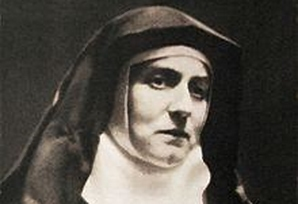
Sister Edith Stein

What were the consequences?  Carmelite nun Edith Stein wrote to Pius Xll to protest the murder of Jews in the concentration camps.  He did nothing.  Sister Edith Stein was executed at Auschwitz April 91942.

Liberal Christians find it easy to blow off all of this.  Their attitude is not to take the Gospels seriously.  The Holocaust happened a long time ago. Evangelicals depend on their own interpretations of the Gospels to support their political agenda.

But we still experience anti-Jewish crimes.  It is always time to look at the root cause.  October 4th and 5th is Yom Kippur, the days of atonement, an opportunity for Christians to discuss root causes over Grandma Ida’s chicken soup, make atonement and spread the truth.


SOURCES

Amy-Jill Levine, Short Stories by Jesus, Harper One, 2014.  John Dominic Crossan,  Who Killed Jesus,  Harper, San Francisco, 1995